*Trigger Warning – images and description of animals being sacrificed are included in the post and can be disturbing*
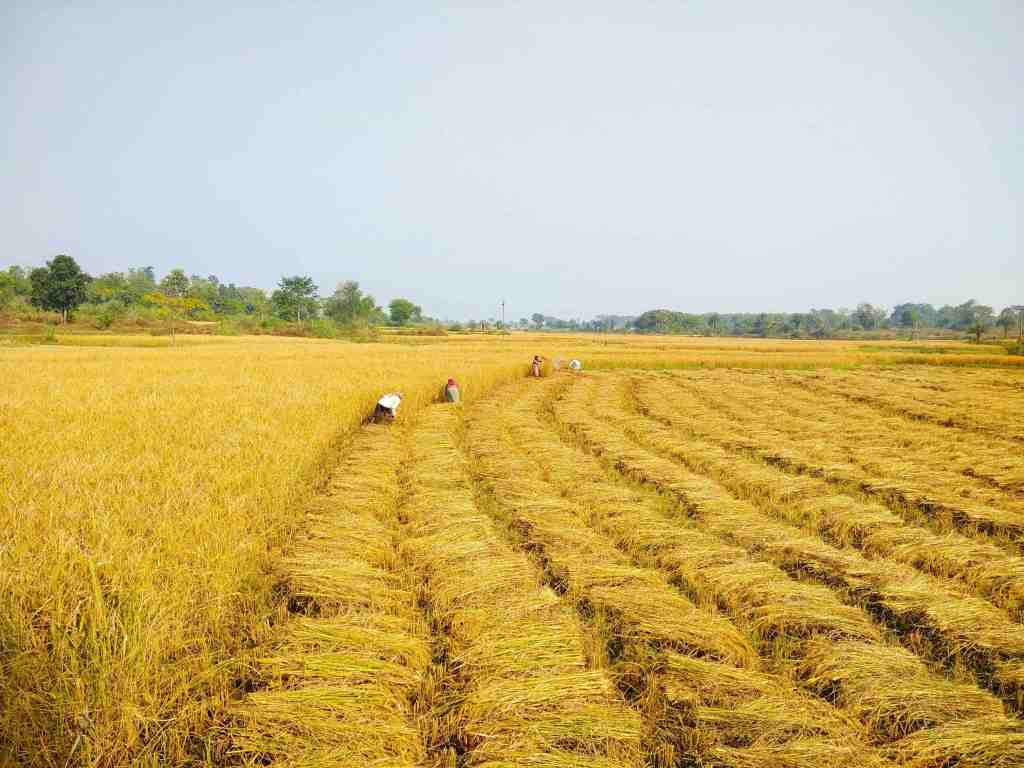
As far as the eyes go, one sees dense golden harvest ready fields. The farmers are brimming with hope and joy. It is just a once a year reap, if that too is not good, what is the point of this all! Joy yes, but there is also some apprehension. The three months of waiting-lazing will now have to be replaced by immense hard work – cut, sort, sell. Men, women, children. Everyone is out on the fields. The village is nearly empty.
Purulia is the westernmost district of West Bengal, established on November 1, 1956, known for its rich tribal culture and natural, hilly landscapes. Located on the north of the Kangsabati river, it is characterized by rocky, red-soiled terrain. It serves as a gateway between West Bengal and neighbouring states, popular for the masked Chau dance. Identified as one of the 16 Mahajanapadas in the 5th century A.D., it is considered one of the oldest regions in West Bengal, with ancient Jain temples and ruins. As of the 2011 census, the population is largely rural (87.26%) with a significant percentage of Scheduled Castes (19.38%) and Scheduled Tribes (18.45%), mainly Santhalis.
The Santhals, one of the largest indigenous scheduled tribes in India, primarily reside in Jharkhand, West Bengal, Odisha, Bihar, and Assam, with significant populations in Bangladesh and Nepal. As an austroasiatic-speaking community, they have a rich cultural heritage, relying on agriculture and nature worship. The backdrop of this photo story is the preparation for the biggest festival of the people. Often compared to the status of Gajraj (elephant) in the forest, they say
“जंगल में हाथी विशाल और पर्वों में सोहराय विशाल”
Pleasing The Deity
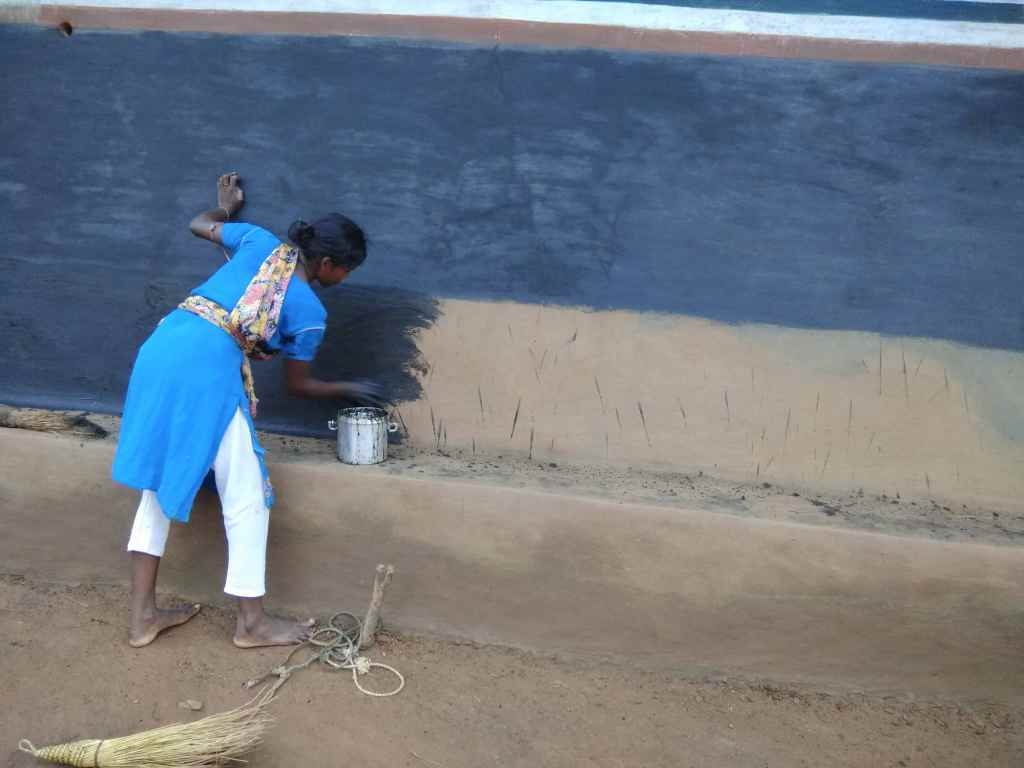
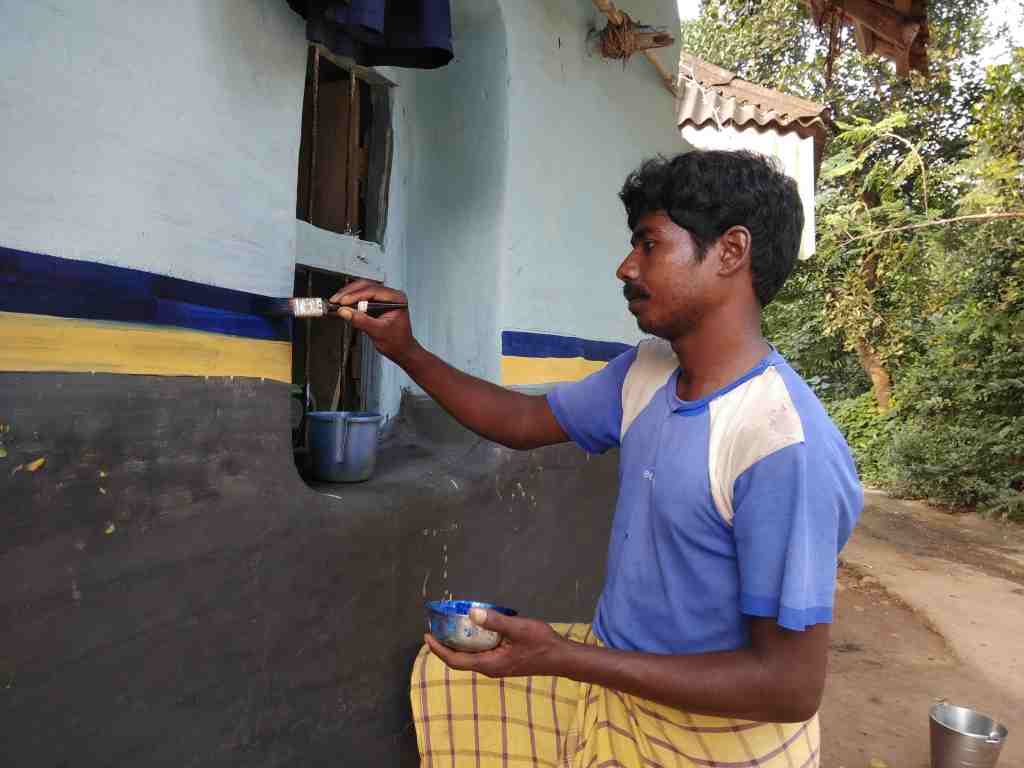
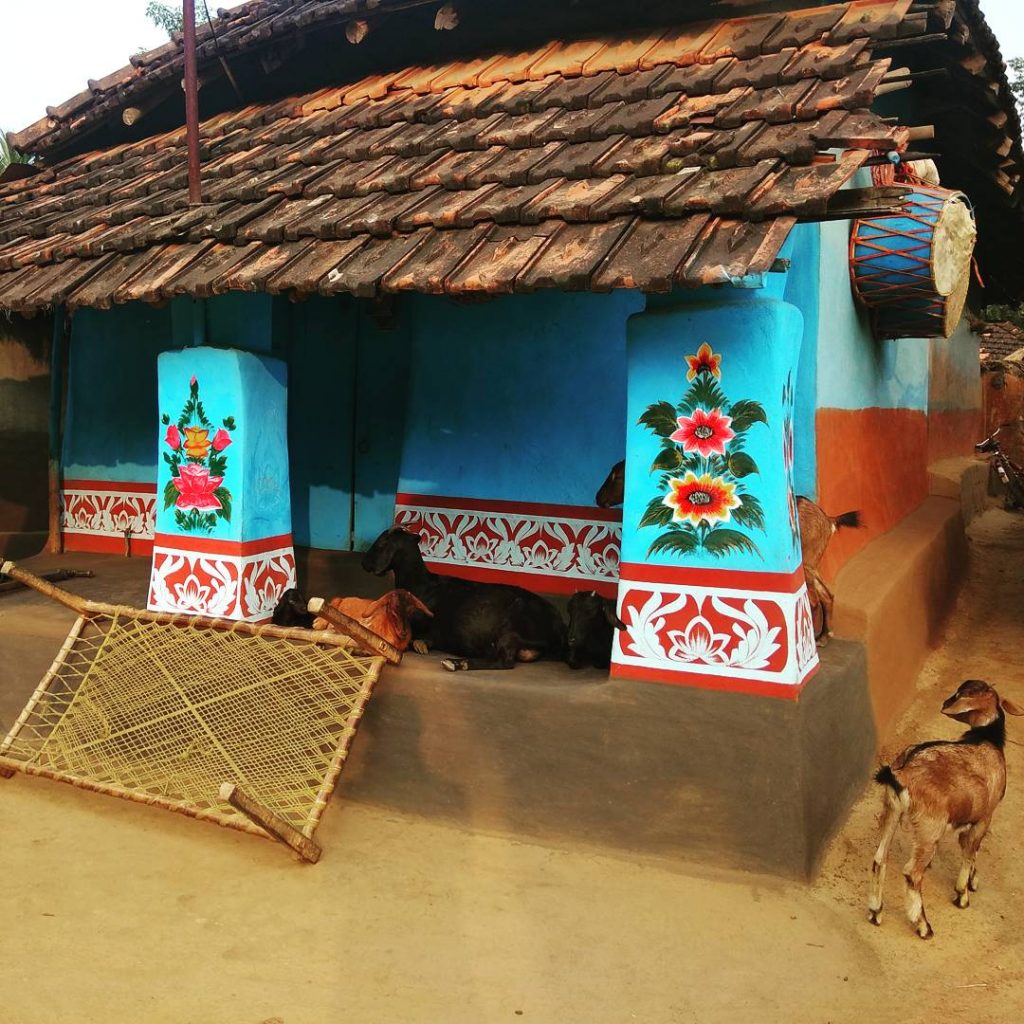
Beginning with the cleansing ritual, people clean and decorate their own bodies and the houses they live in. Fortifying the mud walls with a layer of mud, lacing it with cow dung and painting mural for aesthetics. Interesting side note, this wall mural art, called Sohrai painting received a GI tag in May 2020. One tends to get lost in the immersive attraction of their natural dyes and the soft aroma – petrichor.
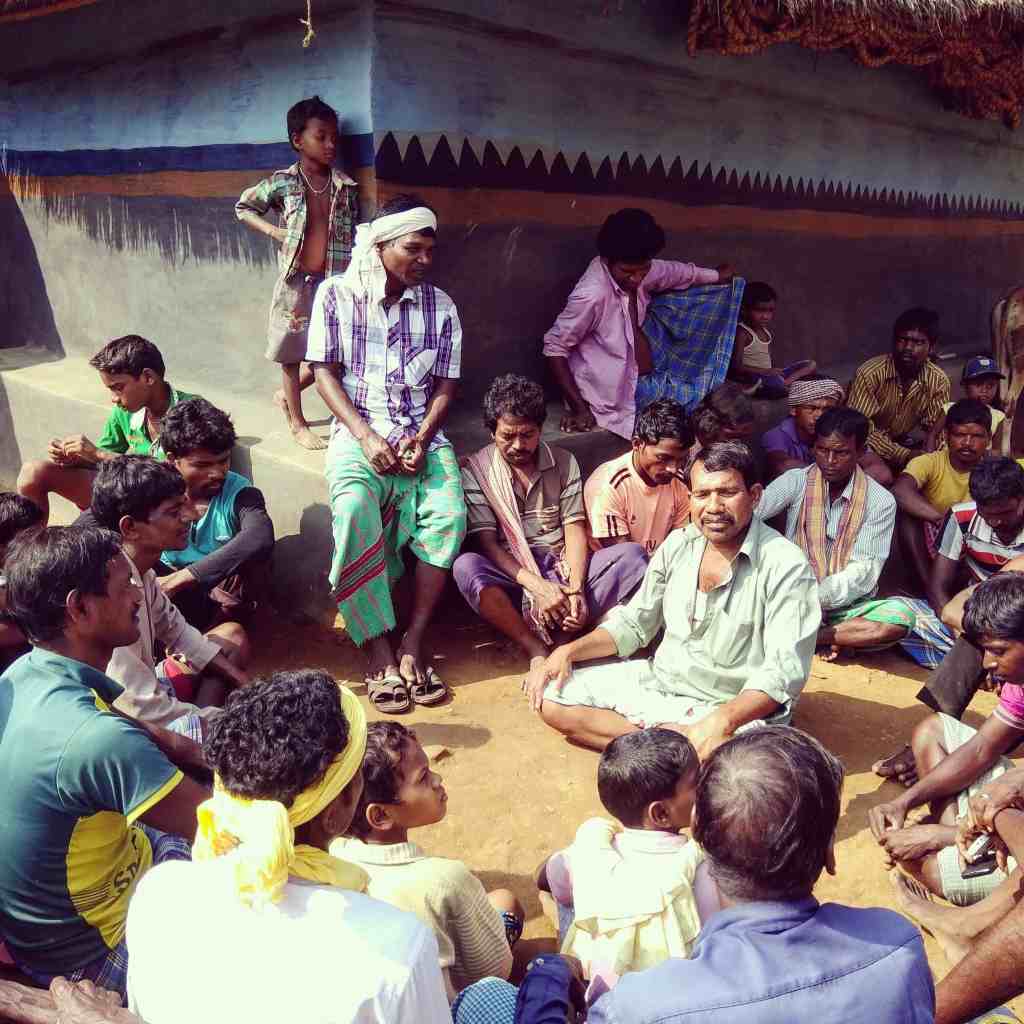
Day one is reserved for offering prayers to the deities; it is called ॐ (pronounced Om). The village priest, Naike, selects a clear paddy field to offer the prayers. The ceremony is attended only by men folk. Godith, the assistant to the priest goes door to door in the village and collects rice, lentil, spices and a hen from every household. The items are offered in a sacrificial act to the deities and spirits and then cooked into a Khichdi (a dish cooked with all the above mentioned items together). This is served to everyone present as blessing. Women are debarred from partaking in this event.
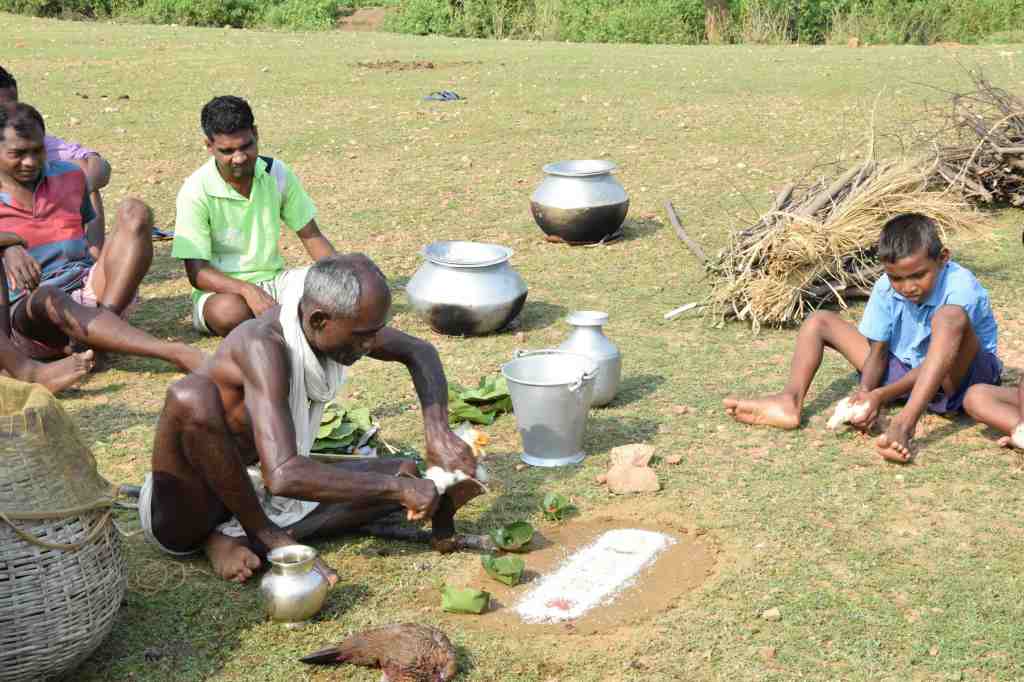
The Naike performs the sacrifice of the hens as others observe
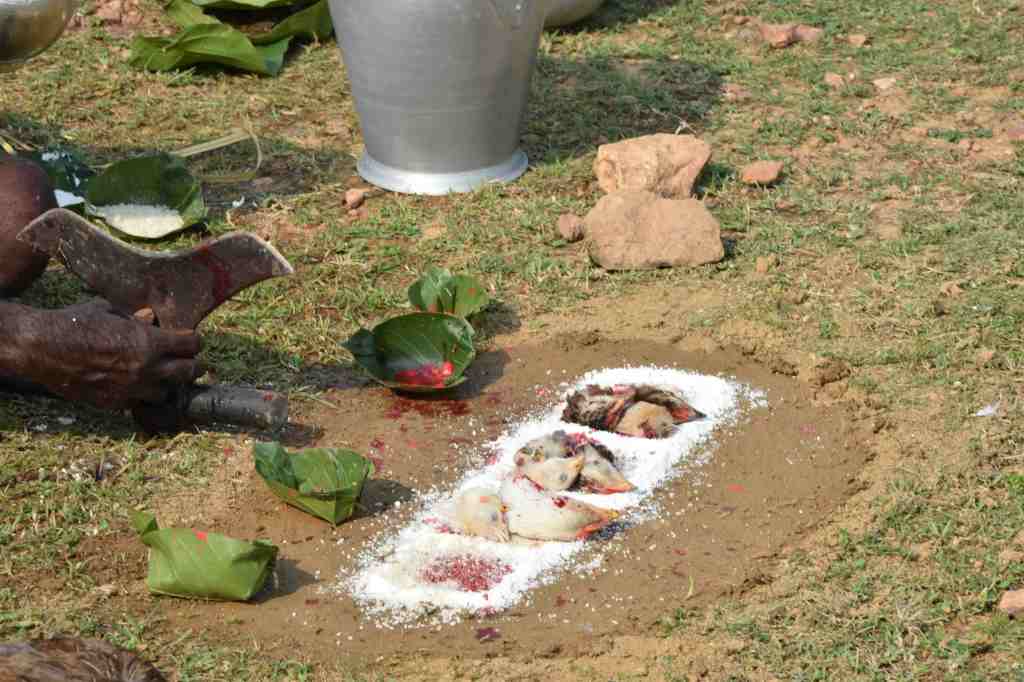
The dead birds lay as offering to the deities and spirits
In the following event, in the same paddy field, bovines from all the houses of the village are gathered. Egg laid by a hen, who is laying eggs for the first time, is kept at the centre of the field and the cattle are made to walk past it. The one that breaks the egg is called Lokkhi Gaai (translates to holy cow) and is believed to be blessed by the deities. She is worshipped by all the people. The owner of the cattle treats all the men with Hadiya (a traditional, culturally significant fermented rice beer consumed by tribal communities like the Munda, Ho, Santhal and Oraon. It is prepared by fermenting boiled rice with herbal starters in earthen pots called Hadi, resulting in a mild, sweet-sour beverage with 5-8% alcohol).
Through the night, Jagoroni songs are sung in chorus. These are meant to keep the bovines awake and wade off evil eye from them. This brings the day one of Sohrai to a close.
The Daughters Return To Their Brothers
The next day, families bring their daughters married off to other places back into their maternal homes. Traditionally, brothers travel to the homes of their married sisters to formally invite them to return for the festivities. The community looks down upon a brother who does not invite his sister. The presence of the sisters, especially those living far away, is considered crucial for the family’s wholeness during the celebration. The sisters sing songs of love and belonging towards their brothers,
“भैया मैं तो तुम्हारे घर की हीं हूँ, तुम्हारे घर और परिवार के बारे में हर एक जानकारी मुझे है|
मैं तो विवाह के तदन्तर दूसरे घर चली गयी हूँ लेकिन मैं तुम्ही में से एक हूँ|
तो कैसे मुझे याद नहीं करोगे?”(Loosely translates to “Brother, I am a part of your home, I know everything about your home and family. I may have left for my in-laws’ house after marriage, but I am one amongst you. How may you not remember me in this auspicious day?“)
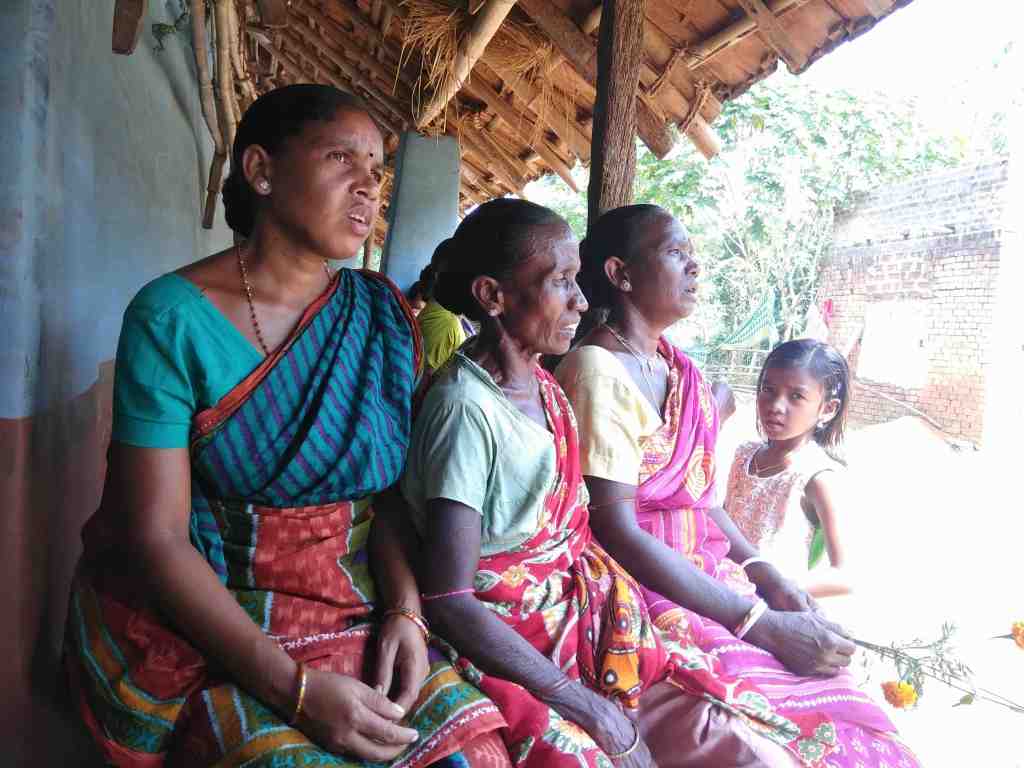
Marang Buru, the supreme deity and Bonga Buru, the spirit of the Santhali people are worshipped on this second day. Afterward, every home makes Jeel Peetha or Mangsho Peetha (rice flour cake and meat stuffed rice flour cake) and has it with Hadiya. This is a merry time spent with family and friends.
In image, Peetha from homes lay on leaf plates in an open ground, with children waiting in the background.
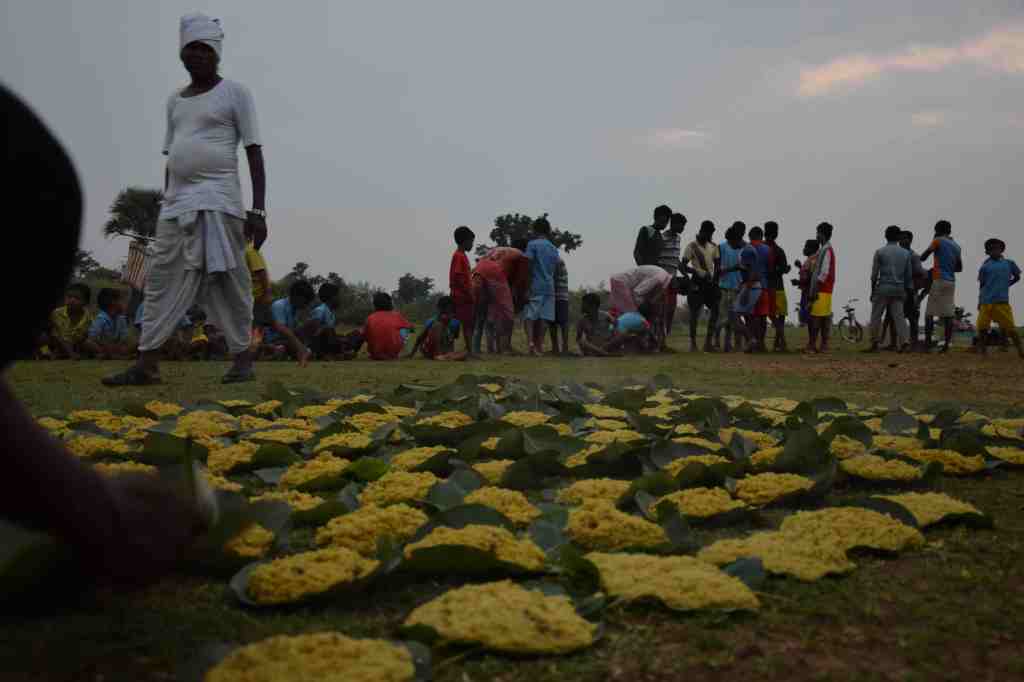
Marang Buru (meaning ‘Great Mountain’ or ‘Supreme Deity’) is the central, revered deity of the Santhal, Ho, Bhumij, and Munda tribes, often associated with the sacred Parasnath Hill in Jharkhand. Marang Buru is viewed as a benevolent spirit, often acting as a mediator for the people. He is considered the protector who was asked by the first human couple, Pilchu Buri and Pilchu Haram, to help their children live in peace. Bonga is a broader term for spirits that control different aspects of life and must be appeased to prevent harm.
Gratitude Towards The Cattle
Day three is Goru (cattle) Khunta (pole). The cattle that has been resting since three months after ploughing is believed to have become lazy and slow at this point. To get it back energised, sporting events are organised. Their bodies are decorated with colours, horns tied with paddy straws and vermillion applied to foreheads. They are then tied to a pole. The villagers tease the cattle with the dried skin of a dead cattle. They beat drums loudly and perform the Ohira (herdsman) song at this point. These songs reflect a deep connection between the community and their livestock, serving as a form of oral history and agricultural thanksgiving. This is repeated a few times and then the cattle are herded back to their sheds for resting.
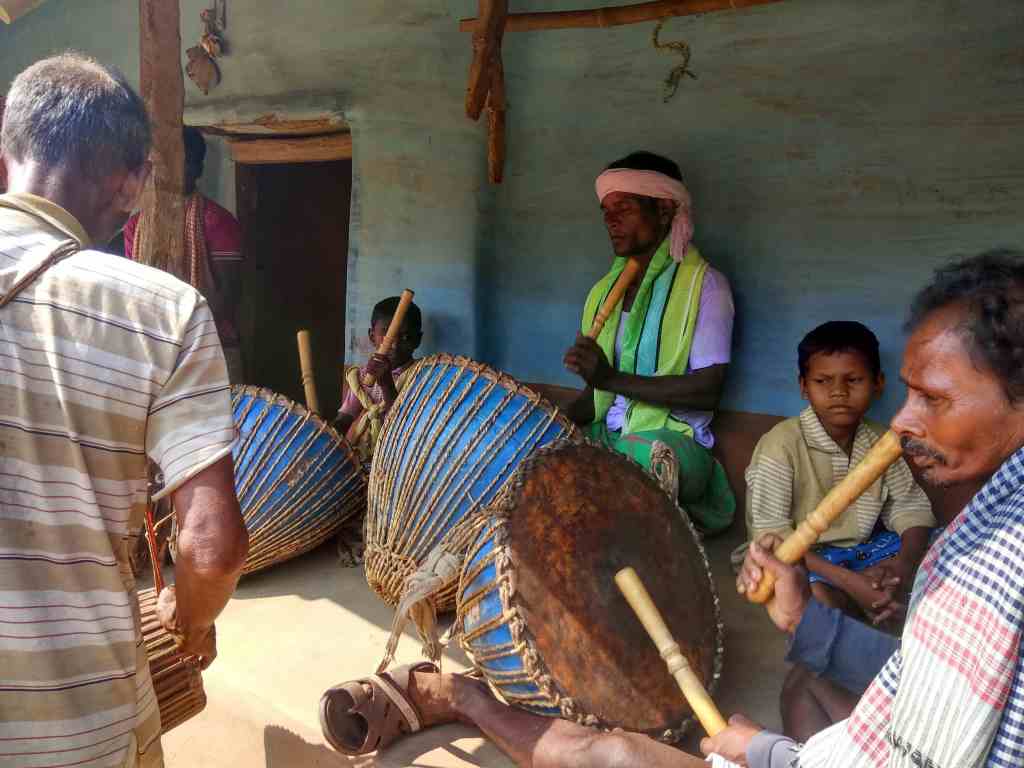
The evening rolls into the next round of song and music extravaganza by the men. Dhamsa (large, bowl-shaped drum, often with a 14-18 inch diameter head made of cowhide, played with two sticks), Madol (cylindrical, two-headed drum made of wood, usually around 3 feet long, featuring goat leather on both sides) and various other instruments are played.
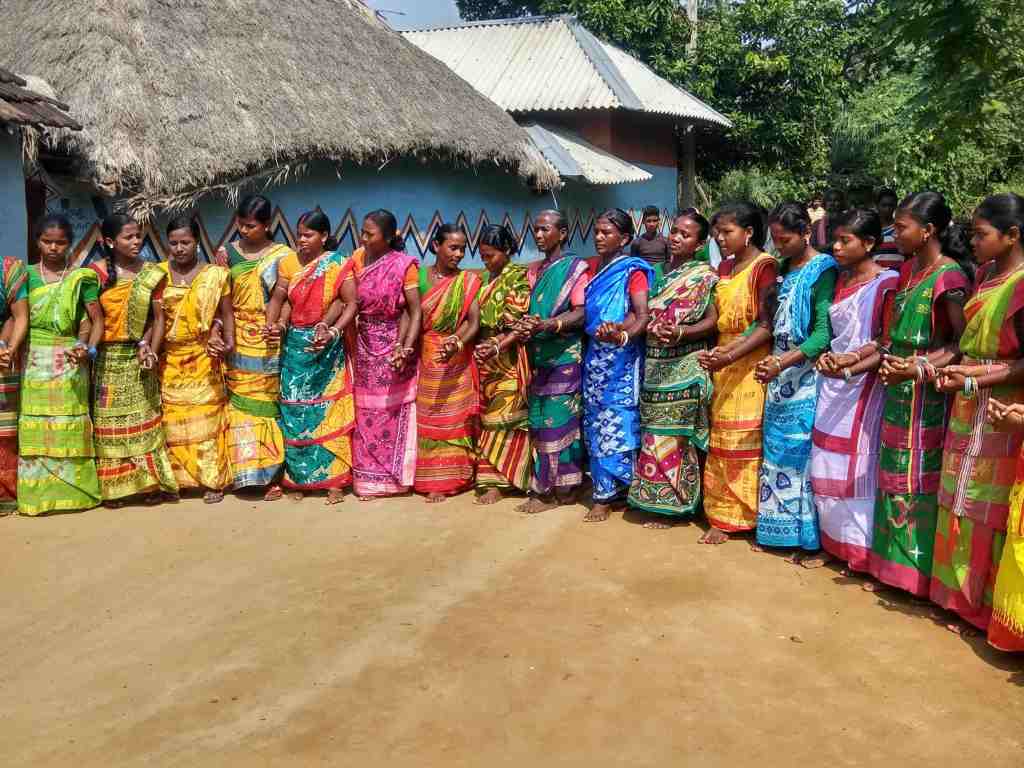
Women participate in it as well. They dance to these melodious tunes. The entire village continues to sing and dance through the day three and four of Sohrai. Good food, drink, music, songs and dancing – along with prayers of blessing the harvest season and gratitude towards the cattle.
In image, a few men gearing up with their Dhamsa for a performance.
Guided Flirtations
On the final day, the young boys and girls of the village are given some freedom to mingle with each other. They go from home to home singing songs and dancing at each cowshed, ‘blessing’ the cattle. They collect vegetables from all the homes and deliver it to the Jog Manjhi’s home. This day is also called Jaale. There is a crucial role played by the Jog Manjhi here. He serves as the deputy headman and the vital custodian of youth, responsible for supervising their moral, social, and ethical conduct. Working under the village head Manjhi, the Jog Manjhi arranges community feasts, manages youth discipline, and directs traditional dances during festivals. He is responsible that the youth reach their respective homes safely at the end of this day after the fun and celebrations. And with this, the festivities come to a close, until the next harvest season.
Further Reads & References
- Sohrai – An Adivasi Festival by Devendra Kumar Nayan in ForwardPress.in, November 2025
- The Rituals of Sohrai by Daricha Foundation
- A glimse of the Sohrai Wall Art by Daricha Foundation
- Story: Saurav Verma, who worked in a community radio station called Nityanand Janvani 91.2FM in 2017-18 in Purulia, West Bengal
- Editor: Anupama Pain, Chabutra Team

 Chabutra
Will love to hear your thoughts on the topic here