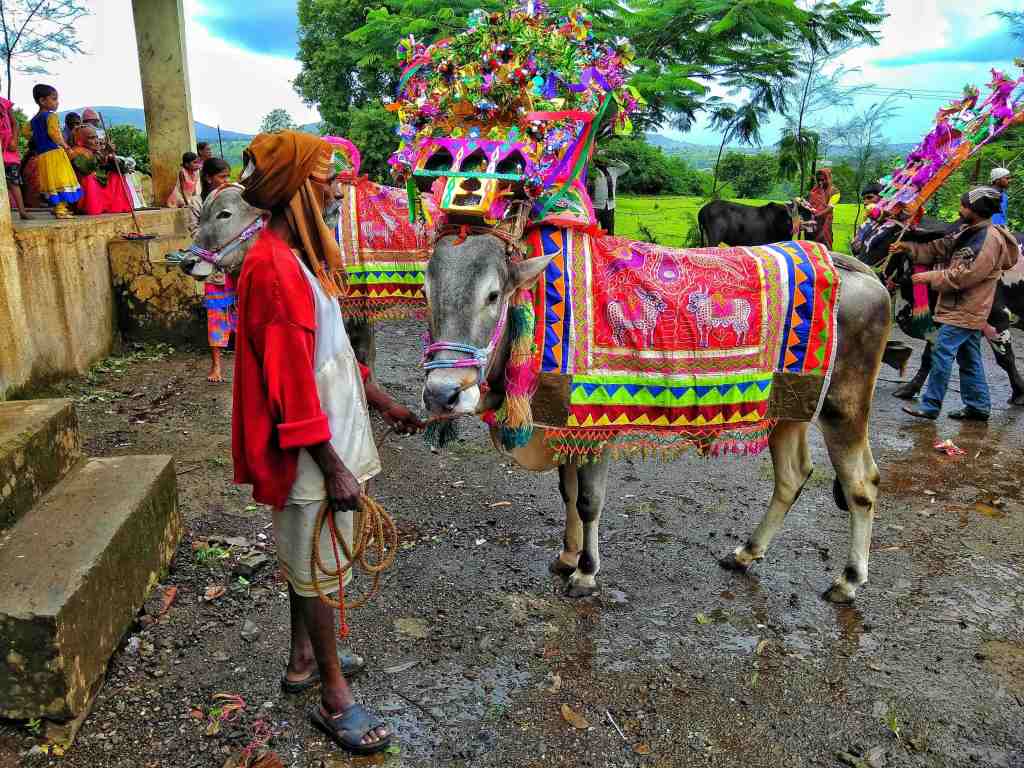
Bail Pola, is a traditional festival celebrated predominantly in Maharashtra, to honor and express gratitude towards bulls and oxen for their vital role in agriculture. An agrarian society, the festival in India typically falls on the Amavasya (new moon day) of the Shravan month in the Hindu calendar (corresponding to the Aug-Sep period of the Gregorian calendar). The festival underscores the importance of cattle in agrarian communities, acknowledging their contributions to farming and livelihoods. It marks the end of the monsoon season and the commencement of the new agricultural year.
This day is also known as Kushopatini Amavasya or Pithori Amavasya. Pitha, in Marathi means flour. It is believed that on this night, the sky looks as if wheat flour is spread all over it. The origins of Pola are intertwined with agrarian traditions and Hindu mythology. Historically, as agriculture became central to livelihoods, bulls emerged as vital assets for plowing fields and transportation. Mythologically, one narrative suggests that on this day, Lord Krishna, as a child, was attacked by a demon Polasur who was sent by Krishna’s maternal uncle Kansa. Eventually, Lord Krishna killed the demon. Another associated with Lord Shiva, that he was moved by the unwavering devotion of his bull, Nandi, and decided to dedicate a day for its worship.
Purushwadi’s Pola Celebration, August 2018
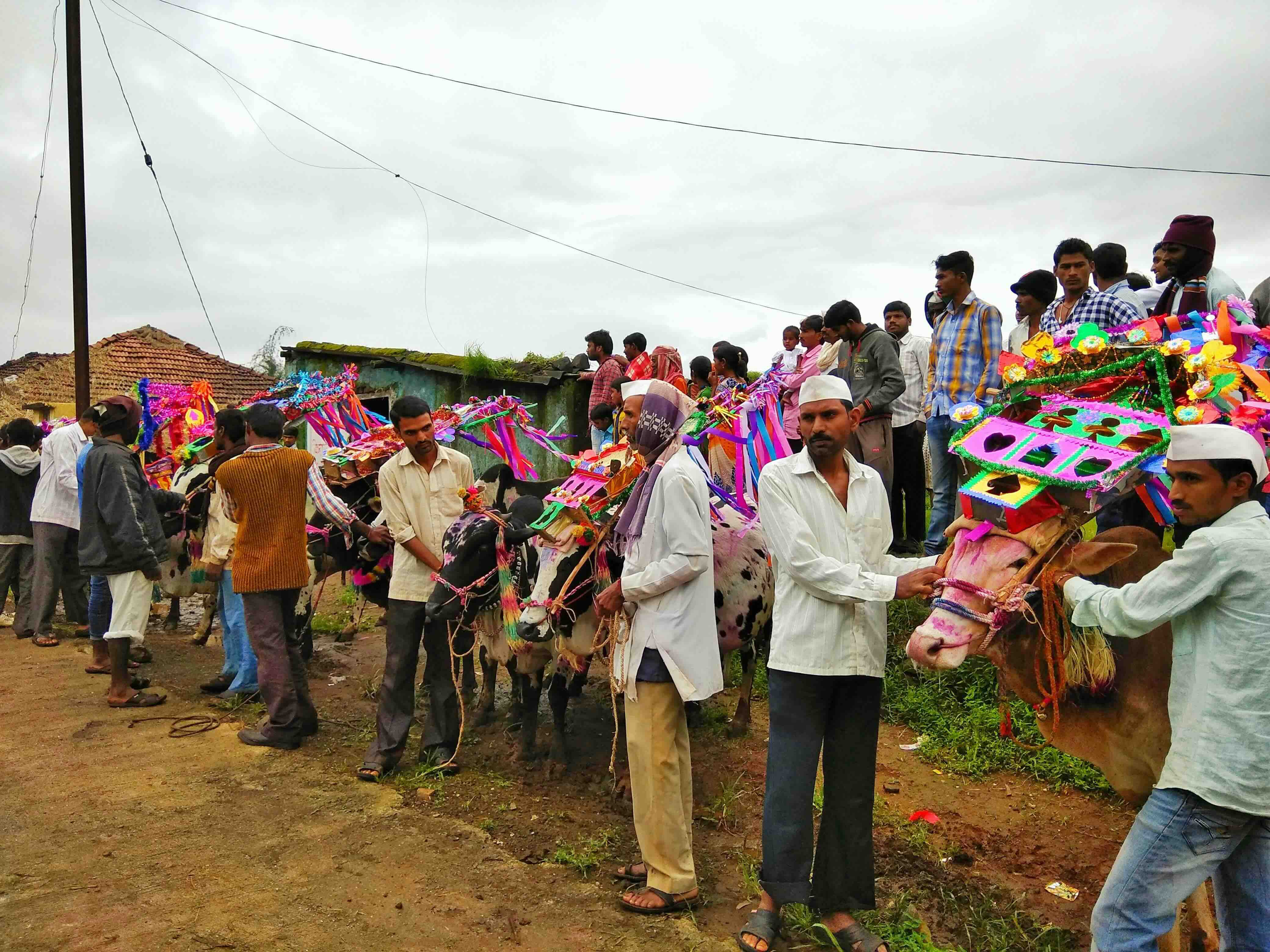
During my visit to Purushwadi, a tribal village in Akole taluka of Ahmednagar district, the Mahadeo Koli tribe of the village was celebrating Pola. The villagers of Purushwadi begin the preparation of festival a few days in advance. The market in Rajur, a small town about 9km from Purushwadi, becomes a profusion for decorative items, colours, bullock idols, toys, bullock head-gear and other ornaments for bulls. Farmers from the nearby villages also come with their families.
On the day of the festival, every family starts with the traditional ritual of taking their bulls to water streams. They massage its shoulders with turmeric paste and homemade white butter. They are washed from horns to tail. After returning, bull’s horns and bodies are painted. Around 4pm, a few villagers come out with their drums and start beating them at the entrance of the village. This is a signal for everyone to bring their bulls. Within minutes, a huge crowd of farmers gathers with their bulls. They walk towards temple ground where each family chooses a place and starts decorating their bulls. Crown like head-gear is fitted to the horns, garlands are tied to their necks and flanks; colourfully quilted and embroidered coats are worn on their backs and ornaments, specially made for Pola are adorned on the bulls. One by one, farmers took them to the temple gate for prayers. The bulls are made to stand on the sides of the road, facing each other.
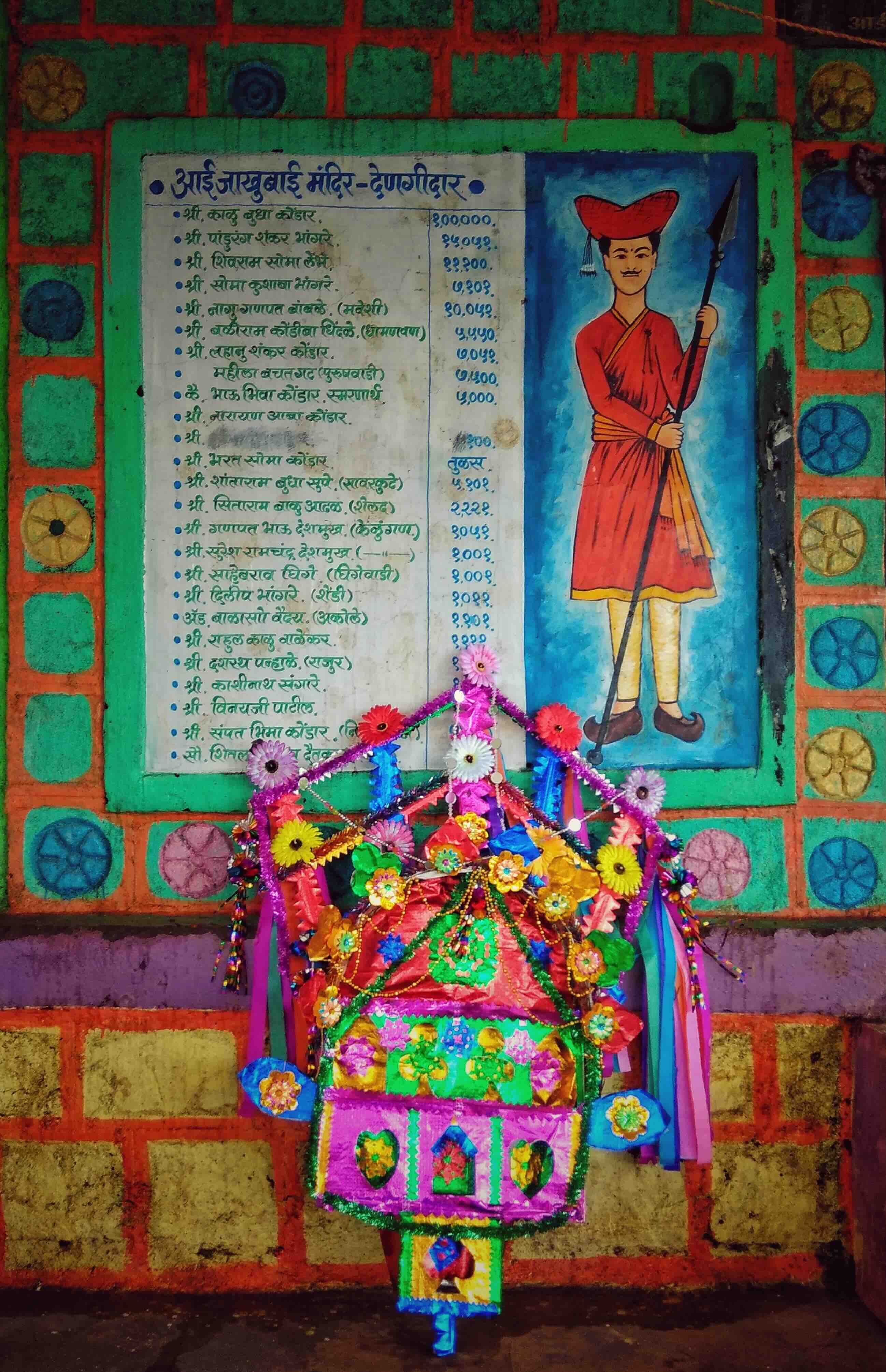
Amidst all this, one of the villagers brings the Lejhim. Lejhim is a traditional folk dance form originating from Maharashtra, characterised by energetic movements and the use of a musical instrument. Lejhim is essentially a wooden stick with jingling cymbals. Women worship the instrument while men pick one each and gather in a circle to dance on folk songs and prayers. While they continue dancing for hours, women stand at a corner, watching.
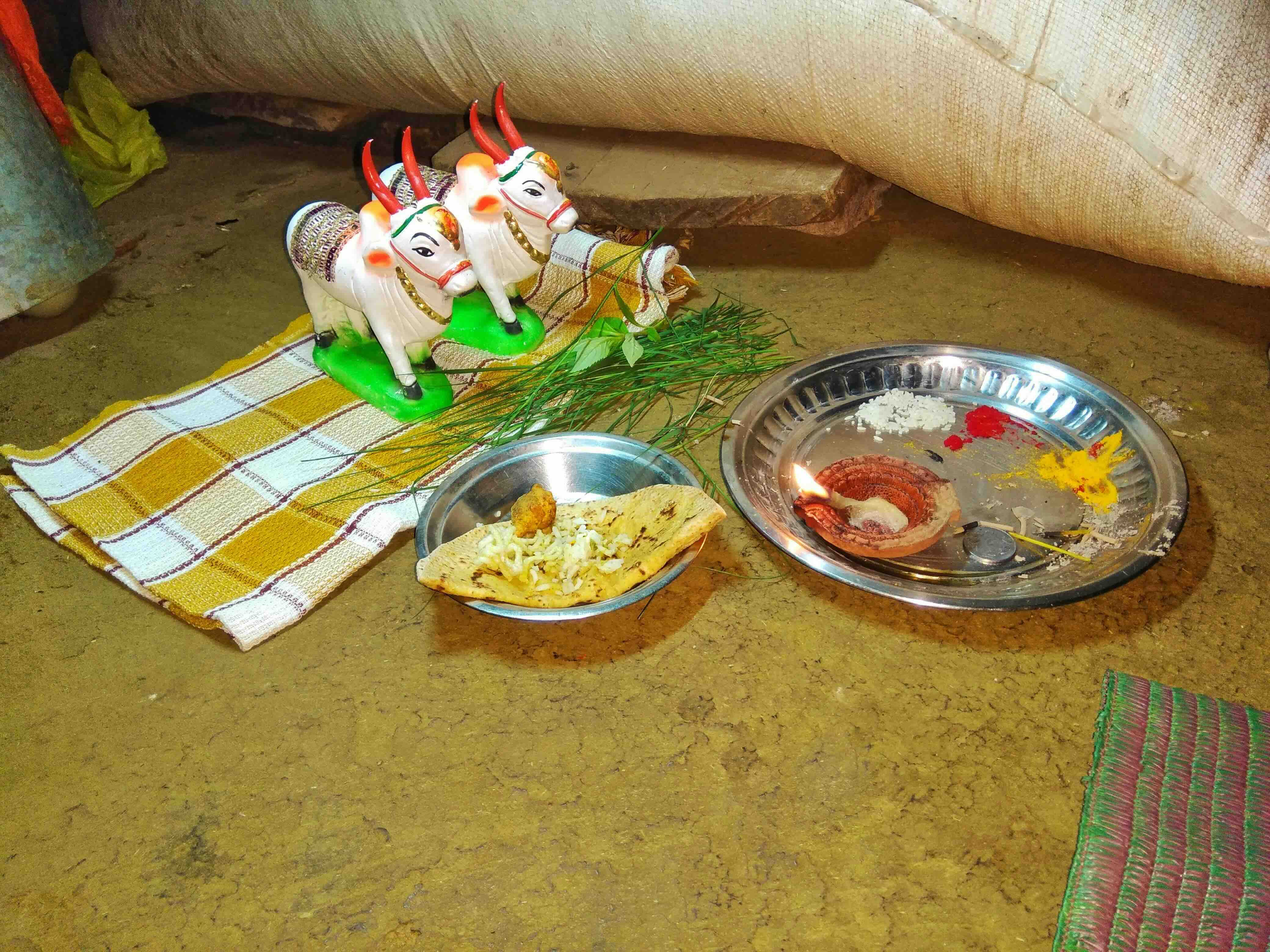
With this, the festive celebration at the common ground comes to an end and everyone goes back home. Those who do not have bulls, bring their idols and worship them at home. Women cook scrumptious festive food for dinner. There are traditional delicacies like Puranpoli, Karanji, Khichadi, and Bhakari.
It was awe-striking to watching the celebration. After returning to my home in Mumbai, I called up my father who is also a farmer in northern India. Overwhelmed upon hearing the stories, he replied, “Cattle becomes the part of the farmer’s family, not just because they help on farms, but also because of all the love they give back.”
Pola At Sangaon, August 2022
Sangaon is approximately 12km from Ambajogai taluka of Beed district. A huge herd of bulls walk on the road with their owners holding the rope tightly. Mini trucks were loaded with loudspeakers. Narrow streets were full of dung. Kids were running on the streets and bursting firecrackers. The auspicious ceremony began at the temple located in the village in early evening. The farmers dragged the bulls and performed Parikarma (circling the inner sanctum of the temple in a clockwise direction).
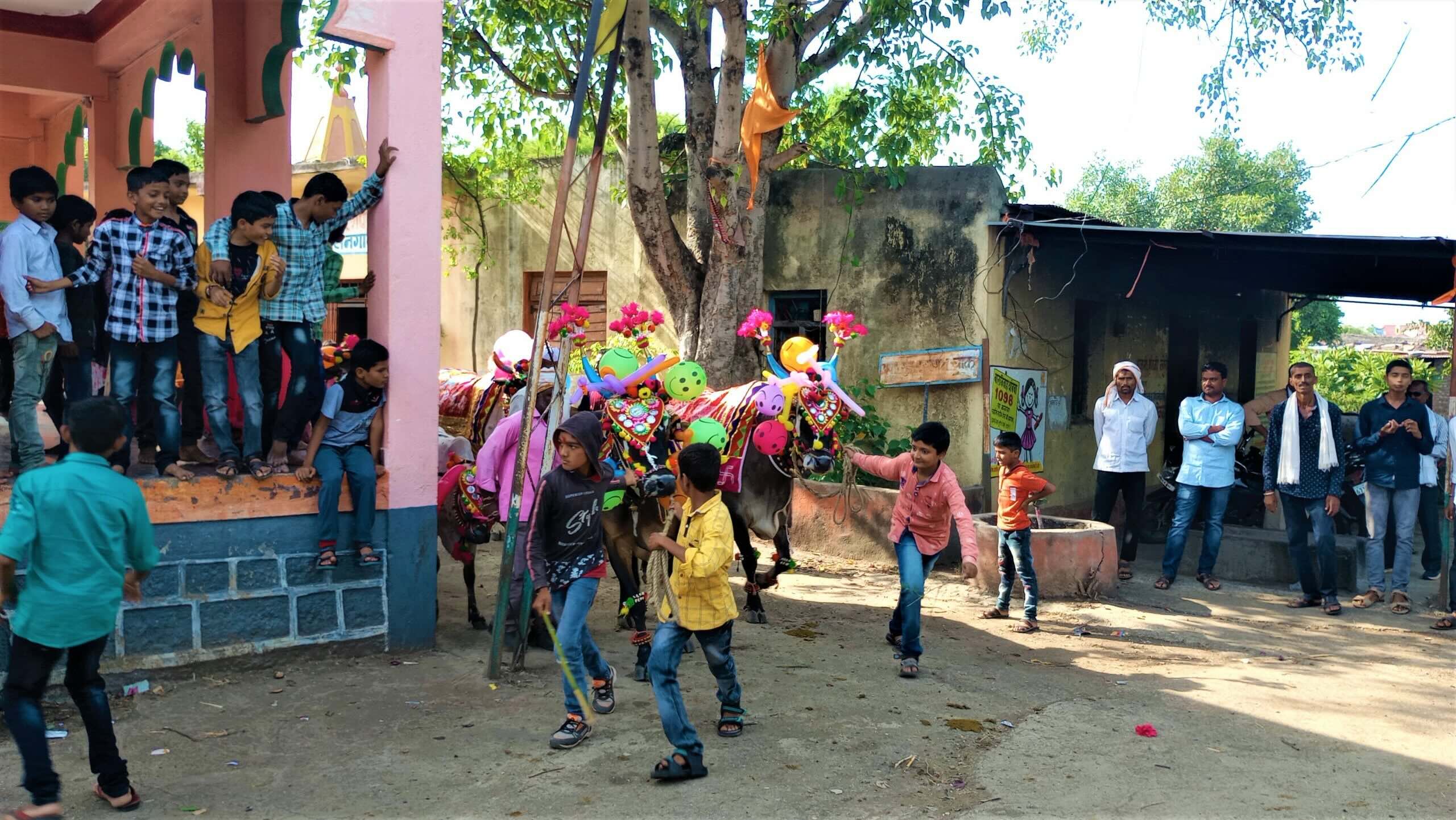
The atmosphere was energetic. People were screaming in enthusiasm and were playing dhol-tasha (type of drums). Ear-deafening Marathi beats were being played on the loudspeaker. With little space, bulls were jumping and trying to free themselves from their owner’s hands. Gladly, the bulls were not after me. But I was afraid, I might come in their way and get crushed instantly.
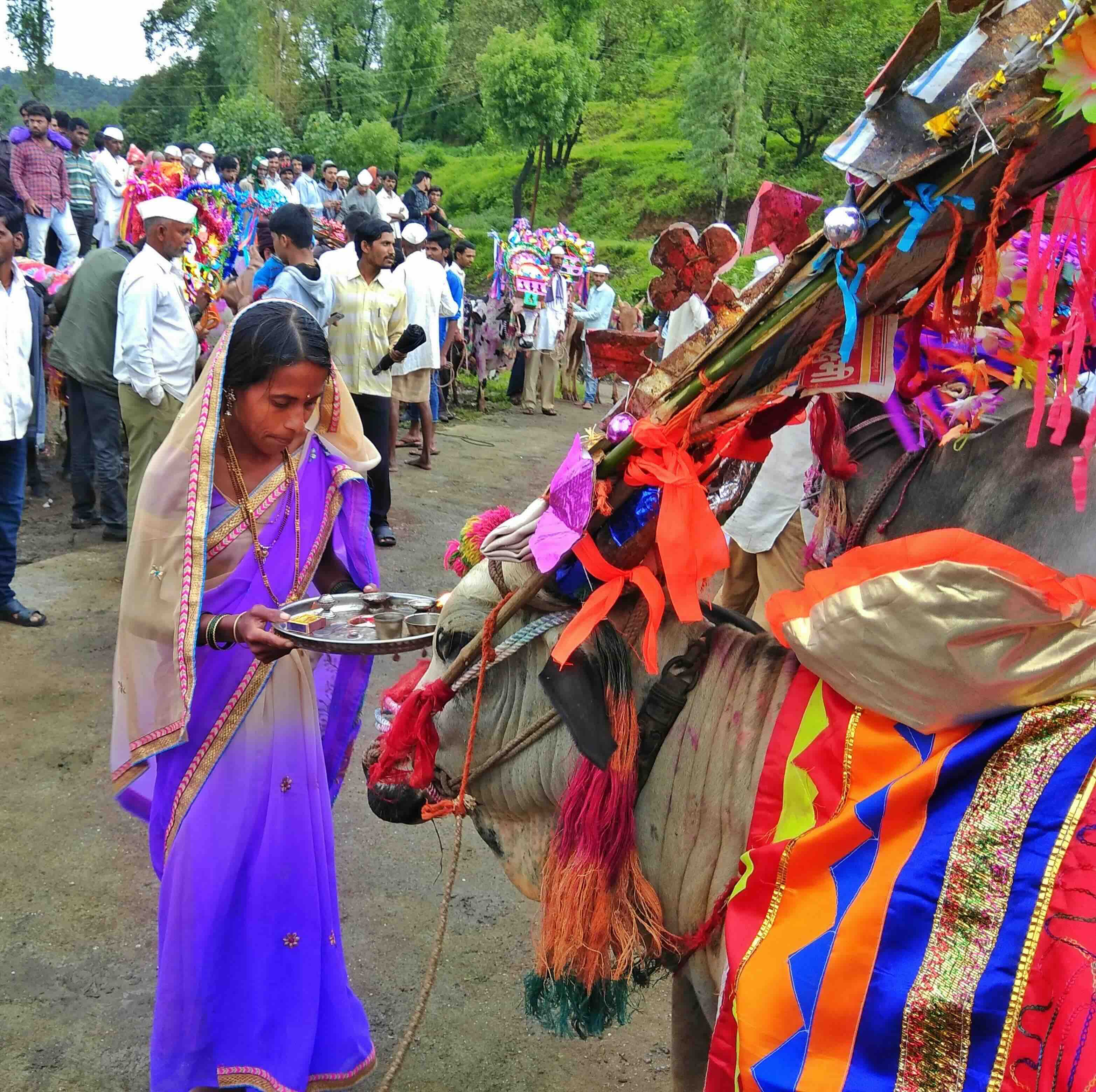
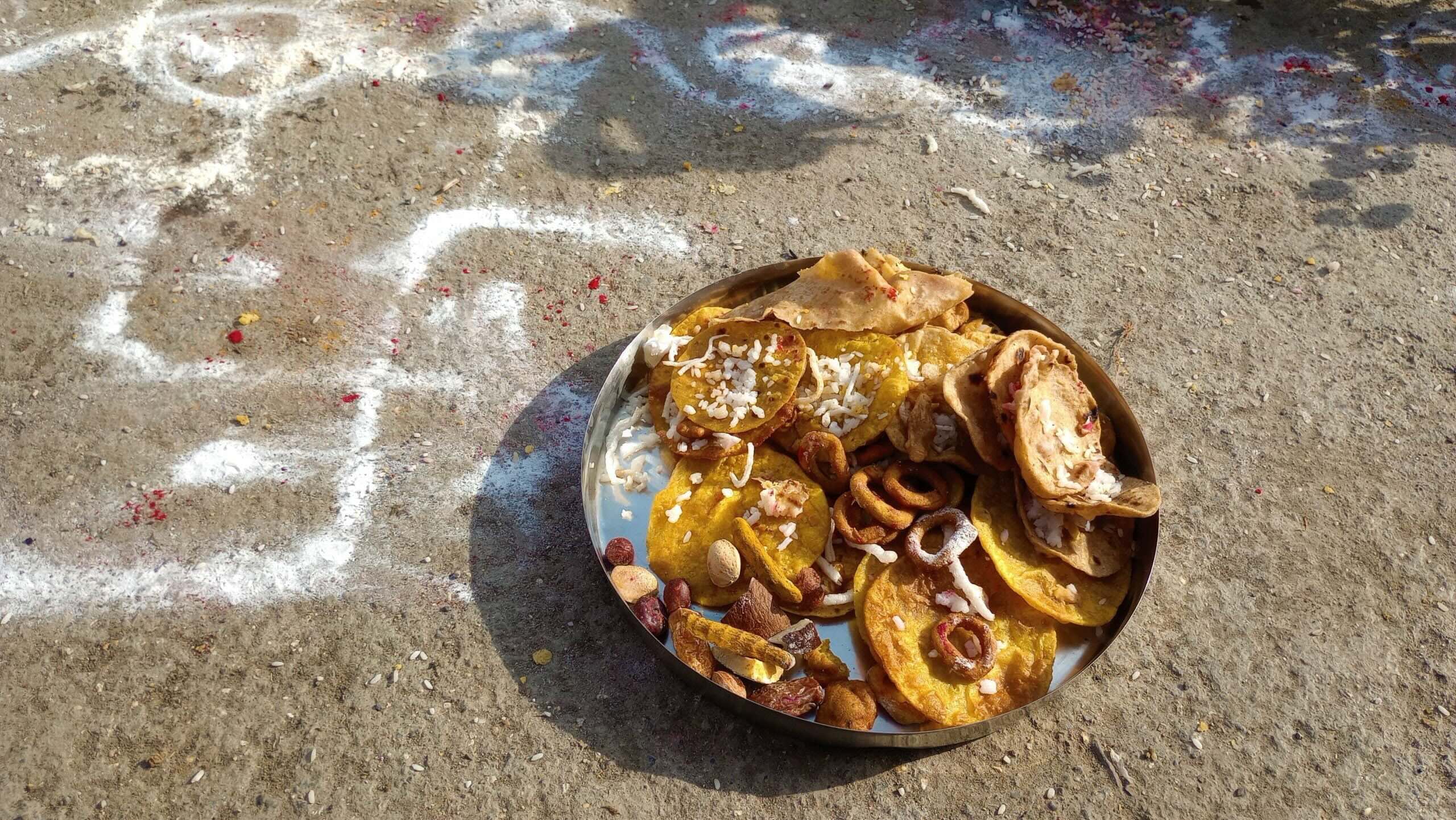
The bulls were taken to their respective households where they stand in a queue. Women were already at the entrance of the house holding Pooja ki Thali with haldi (turmeric), kumkum (vermilion), rice grains, and sweets. The front of the house was decorated with Rangoli. Women began worshipping the bulls by putting a tilak on their foreheads and feeding them with homemade poori, rice, and a sweet dish.

Along with the bulls, the yoke (used for ploughing the fields) is also placed on the floor and worshipped. One by one each family member repeated the process while the male members held the rope of the bulls firmly. Ironically, when the bulls misbehaved or tried to run away, they were occasionally hit by a whip or a large wooden stick.
After an hour of worshipping, the rituals ended by putting a tilak (vermillon on the forehead) on every member’s forehead. Bulls were taken back to the field and the rest of the family gathered on the verandah to enjoy the festive meals. We were served traditional dishes – Puran Poli, Papudi, and Amti. Pola displays the affection and close association between humans and animals. It is a way where humans show their respect towards them.
“Bail poora saal humare kheton mei kaam karti hai, chahe garmi ho ya baarish, hum is ek din unko pujate hai, ek tarike se hum unko thank you kehte hai” (All round the year, the bulls and oxen work on our fields. No matter it is raining or a hot day, this one day we worship them, in a way to say thank you)
A local in Sangaon
Further Reads & References
- The official entry in the Maharashtra tourism website of the government
- A regional article in Marathi in Marathi Maati
- Photostory in Local Samosa
- Story: Vishal Narula who worked for a year in 2017-18 in rural Maharashtra shares the Purushwadi story. Sweksha Gupta who lives and works is in Ambajogai region since 2021 has contributed the Sangaon story
- Editor: Anupama Pain, Chabutra Team
 Chabutra
Leave a comment