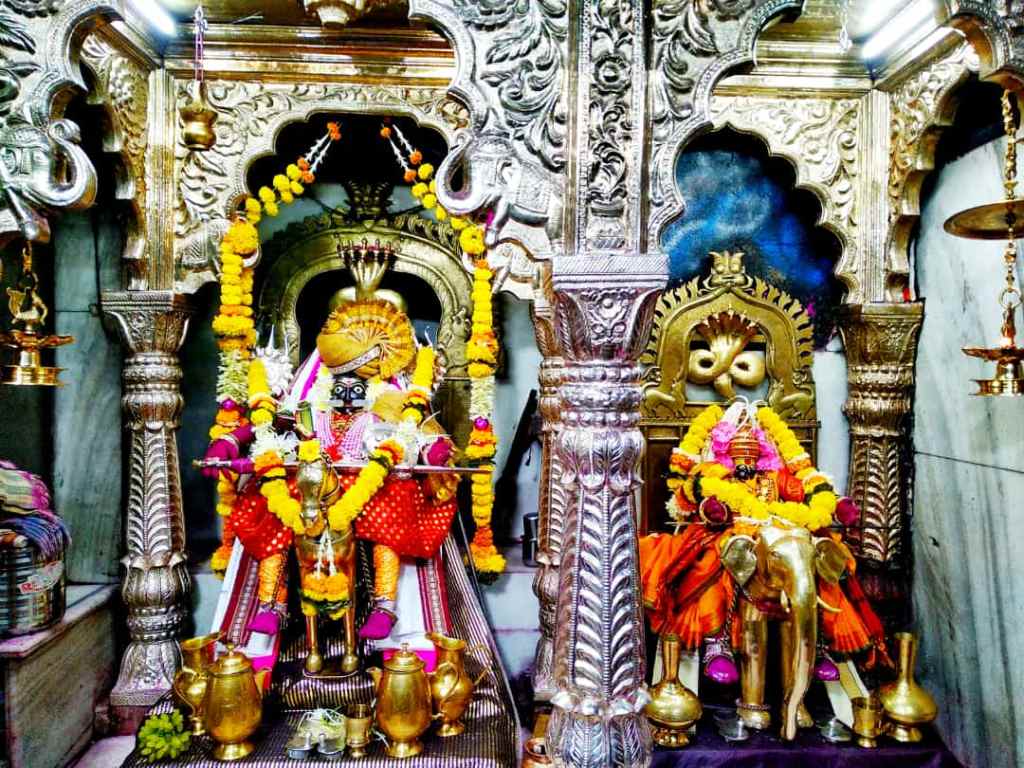
Every year, in December, Mhaswad, a sleepy town in the Maan taluka of Satara district in Maharashtra becomes an epicentre of paramount excitement and activities. Literally lakhs of people from neighbouring districts, towns and villages descend here on the occasion of the Yatra (journey).
The yatra is the largest religious festival of Mhaswad, where the Rath (chariot) of the diety Lord Siddhanath is pulled around the town. Folklore has it that this tradition was started since Lord wanted to show his newly wedded wife, Mata Jogeshwari, his hometown. The yatra is accompanied by a large Mela (fair), held at the Maidan (ground) of Mhaswad. The mela goes on for a few days before and after the yatra, and is the talk of the town, annually.
In my anticipation, I ended up making plans with several different groups of people and was counting days till the yatra arrived. Days before the yatra, there were more people (especially men) on the streets, and eating joints were doing brisk business. The day before the yatra, cars and buses full of people from all over Maharashtra began pulling into the town. My neighbour’s plot, was completely overrun by vehicles and entire families, had made their camps under the open sky in there. That was pretty much the scene throughout the town.
The Day Of The Event
People milled around the streets with their families, covered in pink Gulaal (colour powder) from head to toe. Street hawkers had arrived overnight and were selling ice cream, peanuts, berries and guavas. Around early evening, we heard the sound of drums and excited chants, announcing the rath’s arrival. It looked like a ramshackle structure, but had immense wheels and a throne at its centre, where the Raja Rajmane of the royal family of Mhaswad would be seated. A special place at the centre was also occupied by the idol of Lord Siddhanath from the temple on his round.
Historically, the Mane family, a Maratha Kshatriya (warrior) clan, were rulers and noblemen in Mhaswad. Siddhanath is considered the Kuldaivat (family deity) of this clan. Descendants of the Chalukya rulers (Chalukya dynasty ruled in southern and central India from the 6th to 12th century CE), the Dubal family has been traditionally involved in performing certain rituals during the yatra. The temple priests are responsible for conducting the religious ceremonies and rituals. Only these communities are allowed to sit, stand or pull it. The rest throw coconuts and gulaal at the moving behemoth.
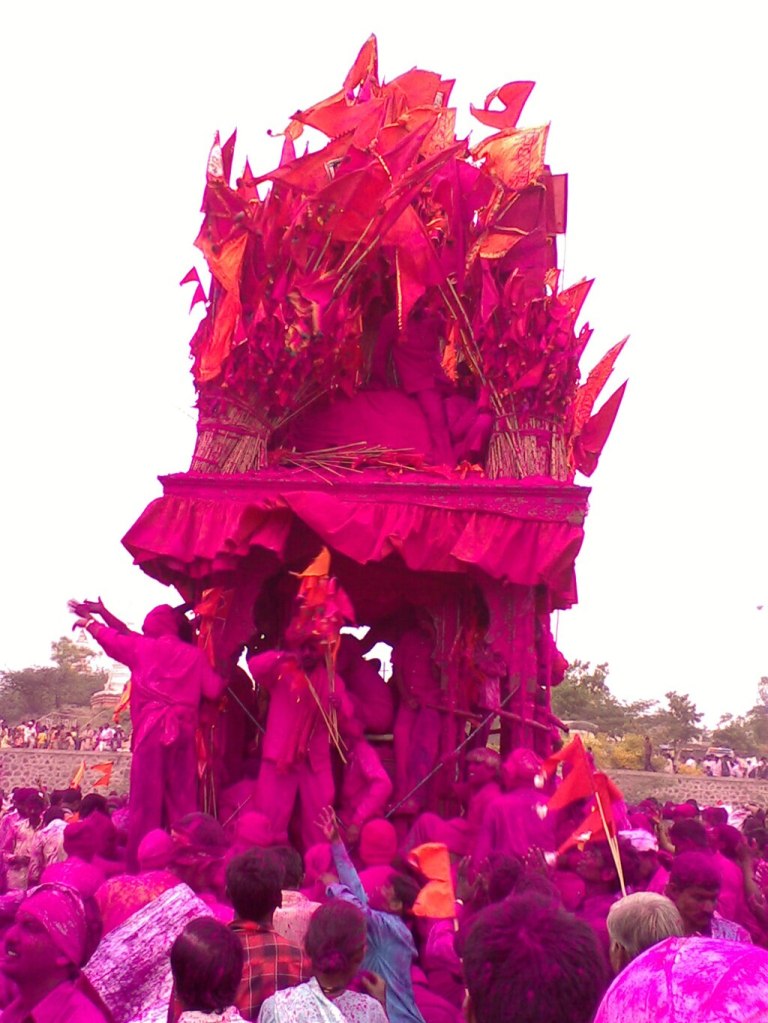
In the fiery glow of dusk, the rath slowly progressed towards the town bus stand, taking with it the mixed crowd of people and vendors. They left in their wake a carpet of gulaal and coconut. From the bus stand, the procession made its way across Mhaswad, depositing the idol of Lord Siddhanath at the temple before ending up at the maidan, where the mela was being held.
Those who traveled with the mela had also arrived a few days before the yatra from Karnataka, and they had managed to set up their entire apparatus within one night! This included classic fair rides such as the giant ferry wheel, swinging boat and crazy cars, food as well as trinkets, utensils, toy and shoe stalls.
Some stall owners had come from places as distant as Uttar Pradesh and Bihar. We could see their makeshift camps on the ground, with bedding, utensils and clothes all piled in a heap. In the last few days of the mela, once the rides and stalls had been dismantled and packed up, these were all that would remain, reminding us of the people who had worked behind the scenes to put up such a grand affair.
Then There Was The Tamasha
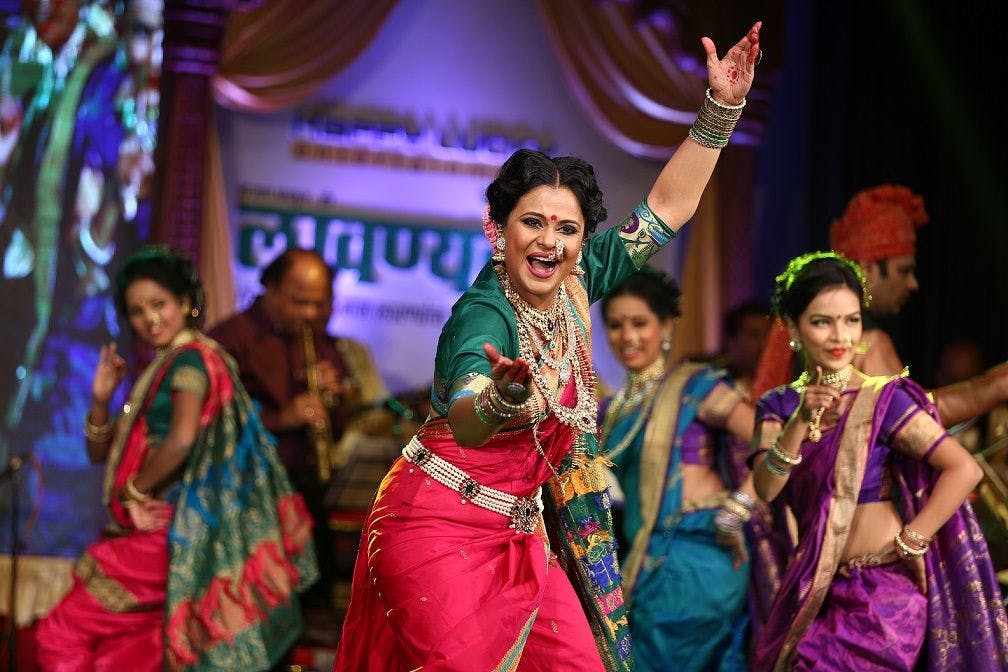
… a traditional folk theatre form of the region. The Tamasha (a Persian word meaning entertainment) evolved from a variety of other folk art forms, such as Kirtan, Jagran and Gondhal. Tamasha is a multi-act performance that incorporates various entertainment elements; specifically Lavani refers to the romantic, devotional, or sensual folk songs and dances that are a central part of the show, often serving as a main performance segment. As a discrete art form, it emerged in the late 16th century, and was infamed for its lewd and bawdy content. This was especially targeted towards the armies of the Mughals and the Marathas, who had made the Deccan a playground for their various altercations.
While singing and dancing girls from northern India came, who brought along elements of dance forms like Kathak, the Dombari and Kolhati acrobats and tumblers of local region joined as entertainers. Local poets composed Marathi songs and Gondhalis who traditionally sang and danced in praise of the goddess Parvati influenced the entertainment.
– Sri Balwant Gargi
Although in later years, the tamasha was refined into a form of family entertainment known as Loknatya (people’s theatre), in many rural areas, it retains its bawdy content. The attendees are mostly all men; the theatre considered a taboo for women to attend. In Mhaswad, the tamasha was held in the nights, on the eve before the yatra and the day of the yatra. A very famous tamasha troupe had come to perform, that of Mangala Bansode, daughter of the famed tamasha artist Vithabai Bhau Mang Narayangaonkar. The performances consisted of dances, songs and humorous skits with double meanings, and incorporated modern content.
While I briefly considered disguising myself as a man to attend the tamasha, I ended up staying home. Unfortunately. I returned to a train of thought that hardly ever leaves my station – the rigidity of gender boundaries, and their consequences for the women who lived with them. In my understanding, the women who performed as part of the troupe were also oppressed by the very same logic that kept ‘respectable’ women away from the tamasha.
Tamasha has a long and chequered history. Folk art forms are one of the ways in which communities express themselves collectively, and are often a source of cultural pride. In fact, the Maharashtra government has honoured several tamasha artists with recognition and awards, including Mangala Bansode and her mother Vithabai, in whose honour it initiated a lifetime achievement award. In 1948 though, the chief minister of Maharashtra, Balasaheb Kher, banned tamasha, deeming it obscene. It was soon realised that the ban caused more distress to the performers than relief. After the ban was lifted in 1954, a compromise was reached, and the Tamasha Board was established to scrutinise and approve the scripts. Today, the art form is not entirely banned, but its practitioners are subject to censorship.
My exposure to rural India has broadened my predominantly urban understanding of feminism and women’s empowerment. It has allowed me to see the many complexities of an issue before making a judgement on it. And so, i will refrain from more personal views and leave you to ponder at this.
Further Reads & References
- A blog published in February 2012 by Sphoorthi Theatre for Educational Puppetry, Art & Craft – STEPARC
- This article gives a holistic history of the origin and evolution of Tamasha, by Yakshagana.com, copyright Shri Balwant Gargi
- Aditi Bhagwat, a renowned Kathak and Lavani artist explains the connections between the two art forms in this December 2020 article of India Art Review
- Story: Adrija Chaudhuri who lived and worked with a local non profit organization in Mhaswad in 2018-19
- Editor: Anupama Pain, Chabutra Team
 Chabutra
Leave a comment